
Late 19th/Early 20th Century:
- Opening Decade: Julius and Tilly First, Ruth First’s parents, arrive in South Africa as part of a wave of Jewish immigrants from the Czarist Russian Empire.
1921:
- The Communist Party of South Africa (CPSA) is established. Tilly First is a member.
1922:
- White miners’ revolt occurs in South Africa.
1925:
- May 4: Ruth Heloise First is born in Johannesburg.
1930s:
- Purge within the CPSA occurs.
- The Communist International (Comintern) “Black Republic” thesis leads to an upsurge in black membership of the CPSA.
1939-1945:
- World War Two takes place. Ruth First becomes active in rallying public support against fascism.
- Revival of CPSA activity and its support for the Soviet Union occurs during the war.
1942:
- Ruth First begins studying sociology at the University of the Witwatersrand (Wits).
- Ruth First becomes active in student politics and joins the Young Communist League (YCL).
1946:
- Ruth First graduates from Wits with a BA (Social Studies).
- Ruth First becomes secretary of the YCL.
- Ruth First participates in duplicating and distributing leaflets during the African Mine worker’s strike.
1949:
- Ruth First marries Joe Slovo.
1950:
- The CPSA is banned by the South African government.
1950s:
- Ruth First plays a central and significant role in the struggle against apartheid.
- Ruth First works as a searing and tireless investigative journalist, reporting on the Defiance Campaign and exposing the brutality of the apartheid regime.
- Ruth First becomes part of the trusted circle reviving the Communist Party in its clandestine form as the SACP in 1953.
- Ruth First helps establish the Congress of Democrats (COD) in 1953.
- Ruth First assists in formulating the Freedom Charter from the shadows.
- Ruth First, working with Gert Sibande and Joe Gqabi, plays a pivotal role in exposing the farm labour scandal.
- Ruth First edits the monthly journal, Fighting Talk.
- Ruth First undertakes international trips for the Party to observe conditions in the Soviet Union, Eastern Europe, and China.
1955:
- Ruth First is prevented from attending the historic Congress of the People at Kliptown due to a government banning order.
1956:
- Ruth First is arrested as one of the 156 accused in the Treason Trial (lasting until 1961) along with her husband Joe Slovo.
1956-1961:
- The Treason Trial takes place.
March 21, 1960:
- The Sharpeville massacre occurs.
Following Sharpeville massacre (1960):
- State of emergency is declared.
- Ruth First avoids arrest and seeks refuge in Swaziland with her daughters.
December 16, 1961:
- Umkhonto we Sizwe (MK) is born. Ruth First is involved in the initial Sabotage Campaign, including the production and distribution of literature.
1962:
- The newspaper New Age is banned, the final banning of the newspaper under its various names.
August 1963:
- Following the Rivonia arrests, Ruth First works in stealth alongside Bram Fischer and Hilda Bernstein to assist those in hiding.
- Ruth First is arrested under the 90-day Detention Act.
1963:
- Ruth First is held in solitary confinement for 117 days.
1964:
- Ruth First is released from detention.
- Joe Slovo is abroad on a mission arranging training and weapons for MK.
- Ruth First, her mother, and her children leave South Africa on an exit visa, effectively entering exile and forbidden to return.
- The Slovo family joins Joe Slovo in London.
1964-1977:
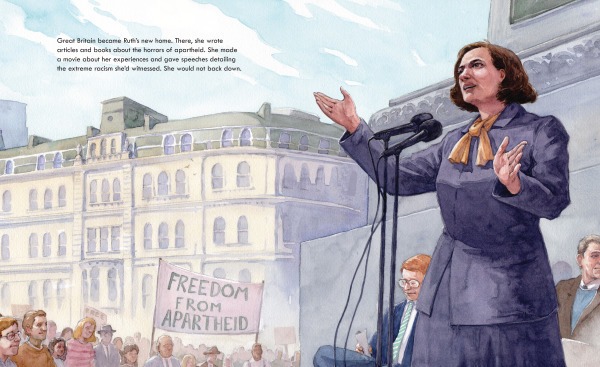
- Ruth First lives and works in exile in Britain.
- Ruth First becomes a leading figure in the Anti-Apartheid Movement (AAM).
- Ruth First lectures in developmental studies at Durham University for six years.
- Ruth First collaborates with Harold Wolpe and leading left academics.
- Ruth First engages with New Left thinking and activity.
- Ruth First publishes prolifically, including articles in Anti-Apartheid News and Sechaba.
1965:
- Ruth First’s book 117 Days is published, recounting her detention experience. It later becomes the subject of a TV documentary where she portrays herself.
1966:
- Ruth First begins collaborating with Oginga Odinga on editing his autobiography.
1967:
- Ruth First researches and edits the writings of Nelson Mandela (No Easy Walk to Freedom) and Govan Mbeki (The Peasants Revolt), both published this year.
- Oginga Odinga’s autobiography, Not Yet Uhuru, edited by Ruth First, is published.
- Ruth First co-edits South West Africa: Travesty of Trust with Ronald Segal.
- June: The Six Day War breaks out. Ruth First is at the London School of Economics (LSE) and expresses hope that Nasser will defeat Israel.
1968:
- The Soviet Union intervenes in Czechoslovakia. Ruth First is critical of this.
1970:
- Ruth First’s book The Barrel of a Gun: The Politics of Coups d’état in Africa is published.
1972:
- Ruth First co-authors The South African Connection: Western Investment in Apartheid.
1974:
- Ruth First is instrumental in establishing The Review of African Political Economy.
- Ruth First’s book Libya: The Elusive Revolution is published.
1977:
- Ruth First moves to Maputo, Mozambique, to run the Centre for African Studies at the Eduardo Mondlane University.
1977-1982:
- Ruth First lives in Mozambique, closely involved with Frelimo, ANC, MK, and SACP structures in Maputo.
- Ruth First directs several large field studies, including a project on migrant labourers in South African gold mines, pioneering participatory grassroots research.
1980:
- Ruth First co-authors the biography Olive Schreiner with Anne Scott.
1981:
- Ruth First’s New Age protégé, Joe Gqabi, is murdered in Harare.
August 17, 1982:
- Ruth First is assassinated by a parcel bomb in her office in Maputo at the age of 57.
1982 (Following Ruth First’s death):
- 3,000 people attend Ruth First’s funeral in Maputo.
- Moses Mabhida delivers a funeral oration for Ruth First.
1983:
- Ruth First’s research on Mozambican migrant miners is published posthumously as Black Gold: The Mozambican Miner, Proletarian and Peasant.
1988:
- Shawn Slovo writes the screenplay for the film A World Apart, based on her mother’s life.
Undated (from Gillian Slovo’s work):
- Gillian Slovo’s novel Ties of Blood is based on the family history.
Undated (from Robyn Slovo’s work):
- Robyn Slovo produces a movie scripted by Shawn Slovo about MK, Catch a Fire.
- Robyn Slovo co-produces the documentary film Oliver Tambo’s London Recruits.
May 15, 2025:
- Ronnie Kasrils delivers a lecture on Ruth First’s life and legacy, marking the centenary of her birth, the 80th anniversary of the victory over Nazi Germany, and the 70th anniversary of the adoption of the Freedom Charter.
2026:
- The SACP’s Red Caravan project aims to understand people’s conditions and prepare for the local elections.
Cast of Characters
Here are the principal people mentioned in the sources, with brief bios for each:
- Ruth Heloise First (1925-1982): The central figure of the sources. A revolutionary scholar, investigative journalist, researcher, political activist, orator, and organiser. Born in Johannesburg to Communist parents, she was deeply involved in the South African liberation movement, a member of the SACP, a Treason Trialist, and a leading figure in the Anti-Apartheid Movement in exile. She published numerous influential books and articles on Africa and was assassinated by an apartheid hit squad in Maputo.
- Joe Slovo: Ruth First’s husband. A leading advocate, a member of the SACP, a Treason Trialist, and later Chief-of-Staff of Umkhonto We Sizwe (MK) in exile. He was a dual commander of MK with Nelson Mandela. The sources describe him as a charismatic and sociable individual.
- Julius First: Ruth First’s father. An upwardly mobile, secular Jewish immigrant from Latvia. A member of the Communist Party of South Africa (CPSA) and later the SACP. He founded a furniture factory that served as a refuge and meeting place for comrades. He helped finance the purchase of the Party’s underground Rivonia farm headquarters and fled into exile.
- Tilly First: Ruth First’s mother. A secular Jewish immigrant from Lithuania. A member of the CPSA and later the SACP. She encouraged Ruth to study Marxism and read widely. She cared for Ruth’s children during her detention and went into exile with Ruth and the children.
- Shawn Slovo: One of Ruth First’s three daughters. A prolific writer and film maker who wrote the screenplay for A World Apart, a film about her mother.
- Gillian Slovo: One of Ruth First’s three daughters. A prolific writer, many of whose novels, including Ties of Blood, are based on her family history.
- Robyn Slovo: One of Ruth First’s three daughters. A prolific writer and film maker who produced Catch a Fire (scripted by Shawn) and co-produced Oliver Tambo’s London Recruits.
- Ronnie Kasrils: The author of the lecture from which the excerpts are taken. A member of the SACP Central Committee, a founder member of MK, and a former government minister. He knew Ruth First and Joe Slovo personally.
- Nelson Mandela: A prominent leader of the African National Congress (ANC) and the liberation movement. Acquainted with Ruth First at Wits University. He was a dual commander of MK with Joe Slovo. He moved beyond early anti-communist tendencies and sought to learn Marxism from the SACP, being tutored by Ruth First and Michael Harmel. His writings were edited by Ruth First (No Easy Walk to Freedom).
- Eduardo Mondlane: Later President of Frelimo, the Mozambican liberation movement. Acquainted with Ruth First at Wits University. The university where Ruth First worked in Maputo was named after him.
- JN Singh: A leader of the South African Indian Congress. Acquainted with Ruth First at Wits University.
- Ismail Meer: A leader of the South African Indian Congress. Acquainted with Ruth First at Wits University.
- Norman Levy: A lifelong communist who met Ruth First at a YCL meeting when he was 14 and she was 18. He describes her impact on him at that time.
- Lionel Foreman: A leading theoretician and scholar, present at the YCL meeting with Ruth First and Norman Levy. He was the editor of The Guardian newspaper in Cape Town until his early death.
- Paul Joseph: Present at the YCL meeting with Ruth First and Norman Levy.
- Lucas Masebe: National chairman of the YCL, possibly present at the YCL meeting with Ruth First and Norman Levy.
- Ahmed Kathrada: Possibly present at the YCL meeting with Ruth First and Norman Levy. A prominent anti-apartheid activist and political prisoner.
- Gert Sibande: A rural struggle stalwart who worked with Ruth First to expose the farm labour scandal.
- Joe Gqabi: Ruth First’s protégé who worked with her on exposing the farm labour scandal. He was murdered in Harare in 1981, the year before Ruth’s assassination.
- Govan Mbeki: A prominent figure in the liberation movement. He was in charge of the Port Elizabeth office of the newspaper New Age. His writings were edited by Ruth First (The Peasants Revolt).
- M.P. Naicker: Ran the Durban premises of the newspaper New Age.
- Michael Harmel: Alongside Ruth First, a leading SACP comrade entrusted with tutoring ANC leaders like Mandela and Sisulu in Marxism.
- Walter Sisulu: A prominent leader of the ANC. He moved beyond early anti-communist tendencies and sought to learn Marxism from the SACP, being tutored by Ruth First and Michael Harmel. His radio broadcast message from the underground following Sharpeville was partly written by Ruth First.
- Bram Fischer: A white lawyer and prominent anti-apartheid activist who worked with Ruth First in stealth to assist those in hiding following the Rivonia arrests.
- Hilda Bernstein: A prominent anti-apartheid activist and writer who worked with Ruth First in stealth to assist those in hiding following the Rivonia arrests.
- Harold Wolpe: Ruth First’s comrade and colleague in Britain, with whom she lectured at Durham University and engaged with leading left academics.
- Ralph Miliband: A Marxist Professor who engaged with Ruth First and Harold Wolpe in Britain.
- Jack Woddis: A British Communist Party author on Africa who engaged with Ruth First in Britain.
- William Pomeroy: An American writer who engaged with Ruth First in Britain.
- Ronald Segal: A South African exile who engaged with Ruth First in Britain and co-edited South West Africa: Travesty of Trust with her.
- Ros Ainslee: Engaged with Ruth First in Britain.
- Tariq Ali: A Vietnam solidarity organiser who engaged with Ruth First in Britain.
- Katherine Salahi (then Levine): One of the London Recruits and a member of the collective that established The Review of African Political Economy. She worked with Ruth First on the journal.
- Gavin Williams: A South African academic brought into the working group of The Review of African Political Economy by Ruth First.
- Robin Cohen: A South African academic brought into the working group of The Review of African Political Economy by Ruth First.
- Archie Mafeje: On the advisory group of The Review of African Political Economy, he clashed with Ruth First on the pages of the journal.
- Oginga Odinga: A Kenyan socialist who opposed Jomo Kenyata’s rule. Ruth First collaborated with him in editing his autobiography Not Yet Uhuru.
- Anne Scott: Co-authored the biography Olive Schreiner with Ruth First.
- Gamal Abdel Nasser: The President of Egypt. Ruth First saw him as an example of a patriotic officer linked to the masses who could emerge from military ranks to lead revolutionary change.
- Hugo Chávez: Former President of Venezuela. Ruth First would likely classify him as a patriotic officer leading revolutionary change.
- Ibrahim Traoré: Leader of Burkina Faso. Ruth First would likely classify him as a patriotic officer leading revolutionary change.
- Olive Schreiner: A South African writer and feminist about whom Ruth First co-authored a biography.
- Moses Mabhida: General-Secretary of the SACP who delivered the funeral oration for Ruth First in Maputo.
- S.P. Bunting: A founder member of the CPSA.
- Ivor Jones: A founder member of the CPSA.
- Bill Andrews: A founder member of the CPSA.
- Albert Nzula: One of the first black leaders to rise to prominence in the CPSA.
- Edwin Mafutsanyana: One of the first black leaders to rise to prominence in the CPSA.
- Josie Palmer: One of the first black leaders to rise to prominence in the CPSA.
- J.B. Marks: One of the first black leaders to rise to prominence in the CPSA.
- Johannes Nkosi: One of the first black leaders to rise to prominence in the CPSA.
- James La Guma: One of the first black leaders to rise to prominence in the CPSA.
- Johnny Gomez: One of the first black leaders to rise to prominence in the CPSA.
- Yusuf Dadoo: One of the first black leaders to rise to prominence in the CPSA.
- Moses Kotane: One of the first black leaders to rise to prominence in the CPSA.
- T.W. Thibedi: The first black person elected to the CPSA’s central committee.
- Nadine Gordimer: A cultural figure drawn in by Ruth First for contributions to Fighting Talk.
- Barney Simon: A cultural figure drawn in by Ruth First for contributions to Fighting Talk.
- Shereen Abu Aqleh: A courageous woman journalist murdered in Gaza, whose death Ruth First would have been outraged by.
- Georgi Zhukov: A worker of Red Army fame, cited by Ruth First as an example of a civilian becoming a military leader.
- Mao Zedong: An academic, cited by Ruth First as an example of a civilian becoming a military leader.
- Fidel Castro: A lawyer, cited by Ruth First as an example of a civilian becoming a military leader.
- Che Guevara: A doctor, cited by Ruth First as an example of a civilian becoming a military leader.
- Agostinho Neto: A doctor, cited by Ruth First as an example of a civilian becoming a military leader.
- Amílcar Cabral: An academic, cited by Ruth First as an example of a civilian becoming a military leader.
- General Võ Nguyên Giáp: A history teacher of Vietnam, cited by Ruth First as an example of a civilian becoming a military leader.
- Samora Machel: A male nurse, cited by Ruth First as an example of a civilian becoming a military leader.
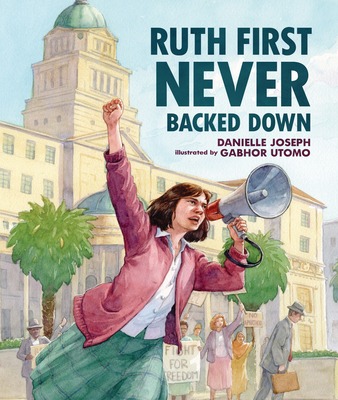
Book can be purchased at Amazon with the link below:
Discover more from Pan Afrikan Comix 2085 Series
Subscribe to get the latest posts sent to your email.